My Journey as an Organist

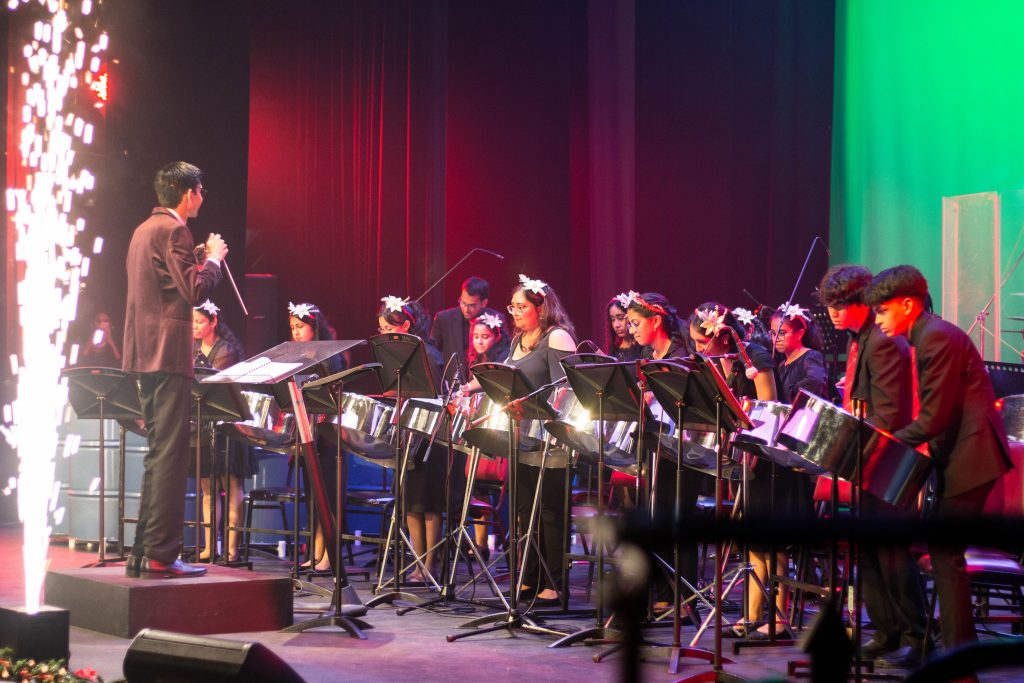
When I was just a little boy, maybe around the age of four or five, I remember sitting with my mother and father in church and hearing the melodious sounds of the Wilson Memorial Pipe Organ, probably played at the time by Colin Persad or Ruth Sitahal. I remember hearing the Susamachar Presbyterian Church Steel Orchestra perform, and I was mesmerised. Captivated by this music, I turned to my mother and I told her, ‘One day I wanna be up there.’
Being the ever-supportive parents, my mother and father enrolled me in a music class with Mrs Bernadette Roberts and Mr Ian Anthony, where I was fortunate enough to be able to learn both pan and piano, as well as develop a love and passion for music theory. While I was pursuing these, I got rather frustrated with the piano pieces. I begged and begged to stop it and both Mrs Roberts and my parents disagreed. Despite this, I convinced them to allow me to stop my formal piano training, much to my regret now, though it never stopped me from pursuing my love for the piano on my own.
I taught myself several things, utilising the foundation laid by Mrs Roberts on the piano, and the theory I learnt from them, and I began to understand the world of chords, reharmonization, reading lead sheets, improvising, and creating new arrangements using the melody as a base. One of the key resources for this was the Book of Praise, a hymn book published by the Presbyterian Church of Canada and utilised by the Presbyterian Church of Trinidad and Tobago (PCTT). In this book, all of the hymns have chord names written above the score, and using this, I learnt to read the symbols. While this method of self-teaching worked in some aspects, it worked against me in that I got lazy with the left hand, and I generally avoided reading the bass clef while sight reading, as sight reading for many other instruments require just reading one stave at a time. I became quite proficient at sight reading treble clef, scoring 10/10 or 9/10 in most of my graded exams, and have rarely had to sight read bass clef, though I could have done it on its own if the need arose. This, however, changed when I began my studies at Uni, as I was forced to improve my two stave sight reading – but more on that another time.
Having learnt to sight read the hymns from the hymn book, my family members began asking me to play for Prayer Meetings/ Prayer Services, and ministers in the PCTT began to see me playing. One Minister in particular, who was
responsible for getting me several jobs outside of the family, was the Reverend Dr Daniel Teelucksingh. Soon, members in my church were asking me to play for their thanksgiving and prayer services at home, as well as wake and memorial services.
Now, my aunt, Sherry Santoo (nee Mohammed) was an organist at Susamachar for about forty years. She saw the talent and said that I should soon start playing the Pipe Organ at my Church. So, my mom and I spoke to the Musical Director of the Susamachar Presbyterian Church, George Poliah, who said that he would have no issue recommending me to be put on the list of approved organists of the church, should I get the necessary training. In 2015, with the help of Aunty Sherry, and Mrs Ruth Sitahal (fondly referred to as Aunty Ruth), together with the encouragement and support of then minister, the Reverend Kendrick Sooknarine, and the Musical Director, George Poliah, I was given the elementary training.
It was a world of opportunities! I fell in love with this phenomenal instrument! To think that this grand acoustic instrument could mix and match sounds like a digital keyboard, completely through wind and pipe! Amazing! I can remember the awe I felt sitting down at the instrument for the first time. And what a perplexing thought with all the knobs (which I soon learnt were called stops), and two keyboards, plus a tiny keyboard that controlled the chimes that are projected outside the church to the whole of San Fernando! And a keyboard for my feet? WHAT? With five strange looking pedals that controlled various other things. No wonder the pipe organ soon became one of my favourite instruments, if not my favourite instrument.On the 31st of January, 2016, I had the opportunity to play my first service on my own. Nervous? Yes. Excited? Definitely! Worried? A little. But it was one of my most memorable experiences yet. The opening hymn was Joyful, Joyful we adore thee, based on the theme of Ode to Joy from Beethoven’s ninth. It soon felt natural. Hymns were becoming very easy to play, my feet became very accustomed to playing as well, and my understanding of the instrument grew more and more. Very soon I was not only playing for church services, but also for weddings, funerals and memorial services. And to enhance my experiences, I was also asked by the Vistabella Presbyterian Church to start playing the keyboard at their church as their


‘organist’ for their services. These opportunities really got me back into regular practising of keyboard instruments (piano, keyboard, organ) and I became very confident and comfortable with my abilities.
In 2017, while doing some research in the PCTT archives, I began to discover the rich history of the Wilson Memorial Pipe Organ. More of this is discussed in another Blog Post called The Making of: The Wilson Memorial Pipe Organ – 90th Anniversary Documentary. This gave me a whole new appreciation of the instrument and was certainly my introduction to real research.
Experimenting with the practical aspect of the organ was a very educational endeavour. Beyond hymn playing, I began exploring organ repertoire from the Baroque, Classical, and Romantic eras. I also studied reharmonization styles of Sir David Wilcocks, John Rutter, Noel Rawsthorne and others who influenced my own style. Reharmonization with hymns is a crucial component of making the music more interesting, as the repetition of the same tune for five or six verses can make for a boring experience for the congregation. Reharmonising ahead of time is always my preference, however, ministers at our church often give us the hymns two days before the service or the day of the service itself, and so one of the other key components of studying these reharmonization ideas was learning to improvise reharmonizations. In the same vein as improvising reharms, learning to improvise on the organ in the various styles was also an important educational experience for me. I then began combining these skills, with my knowledge of arranging and composing to begin arranging and composing for the organ. While I may not have a large catalogue of music composed for organ right now, it certainly has influenced my arranging and composing for other instruments. Playing the pipe organ at Susamachar has evidently been a rewarding and fulfilling experience, but it has opened the doors for even bigger opportunities including playing the organ at the University of Tampa, in Florida, playing organs in England as well, and then becoming a sub organist at St Paul’s Church, Egham Hythe, in England while studying there. These organs were bigger and far more complex than the organ I began learning on at Susamachar. As a sub organist at St Paul’s Church, I was able to learn more about the Church of England and their traditions and music, and also had the opportunity to witness the importance and value placed on the music by their clergy. The clergy and administration of the church were very aware of the music and its arrangements and the importance and relevance of the hymns in worship, as well as the value of selecting hymns that were relevant to the message and scripture. It was something I had not yet, and still do not experience today in Trinidad.
Another learning experience I have had was the opportunity to take charge of and manage the tuning and maintenance of the Wilson Memorial Pipe Organ at Susamachar. Being a young musician, time was something I had much of during and immediately post-Covid. I was tasked by the Music Ministry of the church to oversee the constant maintenance of the pipe organ, including sourcing the tuner, Mr Lance Smith, and constantly monitoring and ensuring that the organ was well taken care of. In essence, I was informally tasked with the position of Organ Curator for the church. Having this opportunity allowed me to learn basic tuning skills as well as repair works that the organ may occasionally need to undergo, as well as having a chance to go into the organ itself which filled me with a child-like excitement.
One of my greatest accomplishments as an organist thus far was the production of an album of organ music I entitled, The Great Hymns. This album consists of ten traditional hymns with reharmonizations and variations from some of the great hymn arrangers like David Wilcocks, John Rutter and Noel Rawsthorne. It also consists of one of my original compositions, Our Father’s Wondrous Works We See. This album was another one of my many passion projects and was directed at churches who may not have their own organists, as well as the general public who love and enjoy some of our great traditional hymns.
Being an organist is not without its hurdles and challenges, but it is rewarding to help people achieve their spiritual goals through my music. It has also provided me with the opportunity to build my musicianship and to expand my knowledge as a musician, ethnomusicologist, composer and arranger. The pipe organ has become my favourite instrument and I hope to continue playing for as long as my hands and feet allow, and I hope to continue advocating for the organ, its music and its history for as long as I am able.